
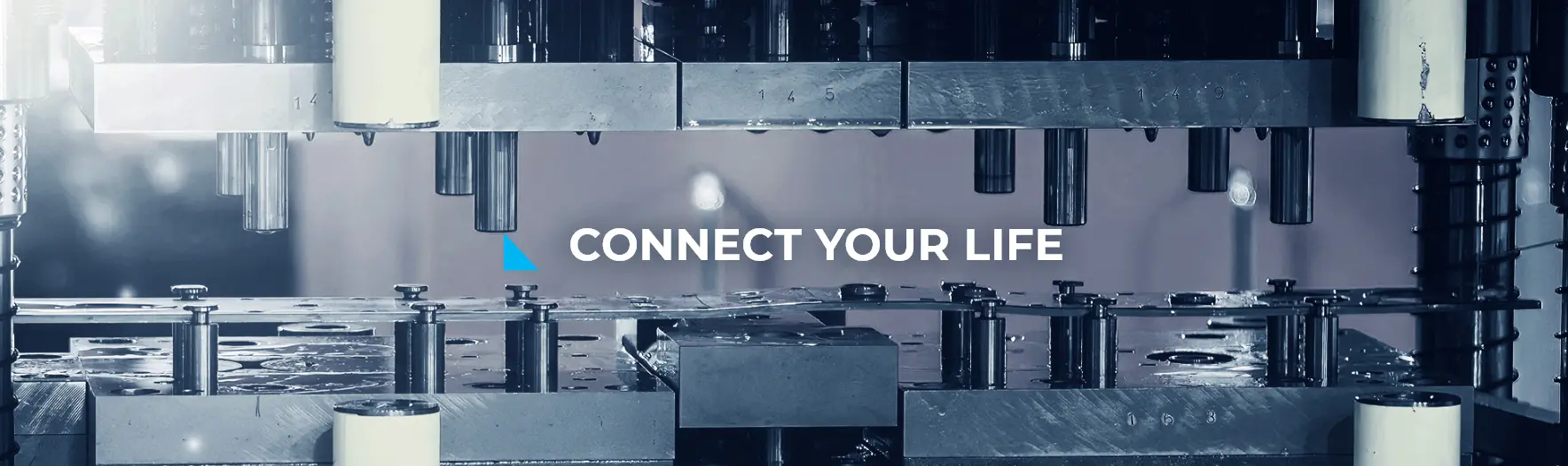
Understanding Metal Stamping: Definition and Process
Content
- What is Metal Stamping? Definition and Principles
- Evaluating Metal Stamping: 4 Core Advantages and Potential Limitations
- From Design to Mass Production: 5 Key Steps of the Metal Stamping Process
- Overview of Metal Stamping Technology: Methods, Dies, and Equipment
- Applications of Metal Stamping: From Precision Electronics to Automotive Components
- Market Outlook & Future Trends
- Conclusion
 Metal stamping is a cornerstone of modern manufacturing. From smartphone internals to automotive chassis, it is integral to producing the high-quality metal stamping partswe rely on every day.
Valued for efficiently converting sheet metal into high-precision parts, stamping has evolved to integrate material science and automation. This article explores the core principles, design-to-production workflows, and market trends for the future.
What is Metal Stamping? Definition and Principles
Fundamentally, metal stamping is a "cold forming" process. Unlike casting or forging, stamping usually does not require heating the metal to a molten state but is performed at room temperature.
How It Works: By coordinating a powerful press with a shaped die, the process applies instantaneous pressure to the metal sheet. This impact forces the material to deform—cutting, bending, or drawing it—into the exact dimensions required by the design.
Evaluating Metal Stamping: 4 Core Advantages and Potential Limitations
When selecting a manufacturing process, understanding the pros and cons of stamping is key to decision-making.
Pros:
- High Efficiency & Consistency: Stamping is a technology born for Mass Production. Once the die is set, the production cycle is extremely short, ensuring consistent quality across thousands of complex metal stamping parts.
- Cost Effectiveness: Although the initial die investment is high, as production volume increases and die costs are amortized, the Piece Price becomes extremely low.
- High Precision: Modern die processing technology can achieve micron-level tolerance control, meeting the stringent demands of the precision electronics industry.
- Design Flexibility: Through compound die designs, complex geometric shapes and features can be realized within a single tool.
Cons:
- High Initial Investment: Developing high-quality dies is expensive. If the product demand is very low, the amortized cost may not be cost-effective.
- Material Limitations: Not all metals are suitable for stamping; the process is limited by the material's ductility and thickness, requiring professional engineering evaluation.
From Design to Mass Production: 5 Key Steps of the Metal Stamping Process
The following is a breakdown of the concrete process from concept to finished product, which determines the success or failure of the product.
Die Design
Die design is the foundation of quality. An excellent manufacturing partner does not just "build to print"; they introduce DFM (Design for Manufacturability) at the design stage.
For example, optimizing product details—such as adjusting Radii (R-corners) or hole margins—before mold creation can enhance structural strength while significantly reducing die wear and maintenance frequency during mass production.
Material Selection Strategy
Material selection in the metal stamping process goes beyond matching specifications; it is a critical factor in ensuring long-term reliability.
The chosen material directly dictates the performance of metal stamping parts, specifically influencing dimensional precision (through springback control), surface integrity, and corrosion resistance.
Common industry materials include:
- Steel (SPCC/SUS): For structural strength and durability.
- Aluminum: For lightweight applications.
- Copper/Brass: For electrical conductivity.
Case Study: EMI Shielding Cases Evaluating the application environment is essential, as demonstrated by EMI shielding components. While SPTE (Tin-plated steel) is frequently specified, it can present risks where corrosion must be strictly avoided. During the metal stamping process, the shearing action exposes the inner SPCC core at the cut edges. These cross-sections become highly susceptible to oxidation when exposed to humidity.
The Solution: To ensure reliability, substituting SPTE with Nickel Silver or other pre-plated alloys is a recommended industry practice. This proactive material adjustment prevents oxidation issues and mitigates the risk of product failure after market release.
Equipment and Tonnage Evaluation: Precise Calculation of Shearing Force
Selecting the wrong press tonnage can lead to excessive burrs on the product or damage to the machine. Before formal stamping, the required Blanking Force must be calculated precisely. The formula is as follows:
P=L×T×S
Where:
- P = Blanking Force (kg)
- L = Shearing Perimeter (mm)
- T = Material Thickness (mm)
- S = Shear Strength of the material (kg/mm²)
Calculation Example: Assuming a part has a shearing perimeter of 200 mm, a thickness of 3 mm, and a shear strength of 60 kg/mm²:
P=200×3×60=36,000 kg
This means a press with a capacity greater than 36 tons is required to perform safe and effective production.
Trial and T0 Verification
The most common challenge during the trial phase is Springback exceeding expectations, which usually stems from variations in material batches or overly conservative designs.
To address this, the capability of an in-house Wire EDM (Electrical Discharge Machining) is critical. When T0 trials reveal dimensional deviations, internal EDM allows manufacturers to immediately machine corrected die components on-site, eliminating outsourcing delays and significantly accelerating the NPI (New Product Introduction) cycle and time-to-market.
Mass Production and QC
To guarantee consistency, a "Double Check" system is recommended where both QC specialists and production workers inspect parts to create a safety net.
The Two-Layer Inspection Process Example
- QC Team: Every hour, 5 pieces are inspected visually, with 2 measured precisely and recorded.
- Production Team: Every hour, 2 pieces are self-checked, with data recorded for 1.
For details on our company’s quality assurance and QC procedures, please refer to the link below:
Comprehensive QC ProcessThe Cost of Quality: High standards require a calculated trade-off. Usually for every 1,000 parts produced, 7 parts are removed for testing and excluded from the final yield. This small sacrifice in quantity is essential to ensure the final shipment meets a 0 PPM (Zero Parts Per Million) defect standard.
Overview of Metal Stamping Technology: Methods, Dies, and Equipment
Building on these process details, the following section outlines the technical framework supporting these workflows.
Types of Metal Stamping / Operation Types
Stamping is rarely a single action; it is often a combination of multiple methods tailored to the specific design. These operations are typically categorized into core forming and precision techniques:
- Core Forming & Cutting:
- Blanking: Cutting the outer shape.
- Punching: Creating internal holes
- Bending: Forming angles or channels.
- Drawing: Stretching metal into cup-like shapes.
- Precision & Detailing:
- Embossing: Creating raised or recessed designs.
- Curling: Rolling edges for safety and strength.
- Coining: Squeezing material for high-precision details.
- Fine Blanking: A specialized technique for achieving ultra-flat edges and tight tolerances.
Die Types Comparison: Progressive vs. Single-Station Dies
Dies are the soul of stamping, primarily categorized as:
- Single-station dies: Complete one operation per stroke; suitable for simple structures or small volumes.
- Progressive dies: Integrate multiple operations into a single die set; as the metal strip moves, the part is formed step-by-step. This configuration is optimized for high-volume production.
- Other types include Transfer dies, Four-slide, and Fine blanking dies.
Press Equipment Specifications
Matching the correct press type to the product is essential for balancing manufacturing cost with performance:
- Mechanical Presses: The standard for high-speed mass production.
- C-Frame: Offers excellent accessibility for quick die changes.
- Straight-Side: Provides superior rigidity, essential for high-precision work.
- Hydraulic Presses: Deliver constant force throughout the entire stroke, making them ideal for deep drawing applications.
- Servo Presses: Feature programmable slide motion, allowing for complex forming operations and precise control.
Applications of Metal Stamping: From Precision Electronics to Automotive Components
The application scope of metal stamping parts is vast, covering critical industries:
- Automotive: Chassis parts, brackets, engine peripheral components.
- Electronics & Semiconductor: Metal housings, heat sink structural parts, connectors, switches.
- Aerospace: High-strength interior components for aircraft.
- Construction: Vent hoods, structural hardware.
- Medical: Precision medical instrument casings, bed frame parts.
- Medical: Precision medical instrument casings, bed frame parts.
Market Outlook & Future Trends
As the industry moves beyond 2025, three key shifts are defining the landscape:
- Market Growth & Resilience: According to research, the global stamping market is projected to reach $373.8 billion by 2033, growing at a 5.0% CAGR . Despite supply chain restructuring in 2025, Taiwan’s sector remains resilient, pivoting toward high-value technical exports to mitigate external risks.
- The EV & AI Revolution: Emerging tech is reshaping material needs. Electric Vehicles (EVs) are driving a shift to lightweight alloys for efficiency, while AI infrastructure demands micron-level precision for complex cooling and structural components.
- Smart & Green Manufacturing: The future is digital and sustainable. Manufacturers are integrating IoT sensors for real-time die monitoring ("Smart Stamping") and optimizing processes to minimize waste, aligning with strict global environmental standards.
Conclusion
Metal stamping efficiently turns concepts into reality. Since every step from die engineering to QC defines value, success depends on a partner with deep technical expertise and strict standards.
To bridge the gap between complex design and mass production, Ming Chiang Precision offers a vertically integrated solution.
As a prime example of the precision stamping and material science discussed in this article, we specialize in Customized Spring Components—including contact clips, retention springs, and terminals. Ming Chiang is one of the leading metal stamping manufacturers in Taiwan. Ming Chiang leverages over 30 years of expertise to deliver consultative support and optimal material selection:
- Versatile Applications: From cost-effective Spring Steel for automotive clips to Beryllium Copper for high-performance aerospace electronics.
- Certified Quality: Manufacturing backed by IATF 16949 (Automotive) and ISO 13485 (Medical) standards.
- Speed: Delivering production-ready parts in under 4 weeks.
Contact us for tailored consultation on precision spring components.