
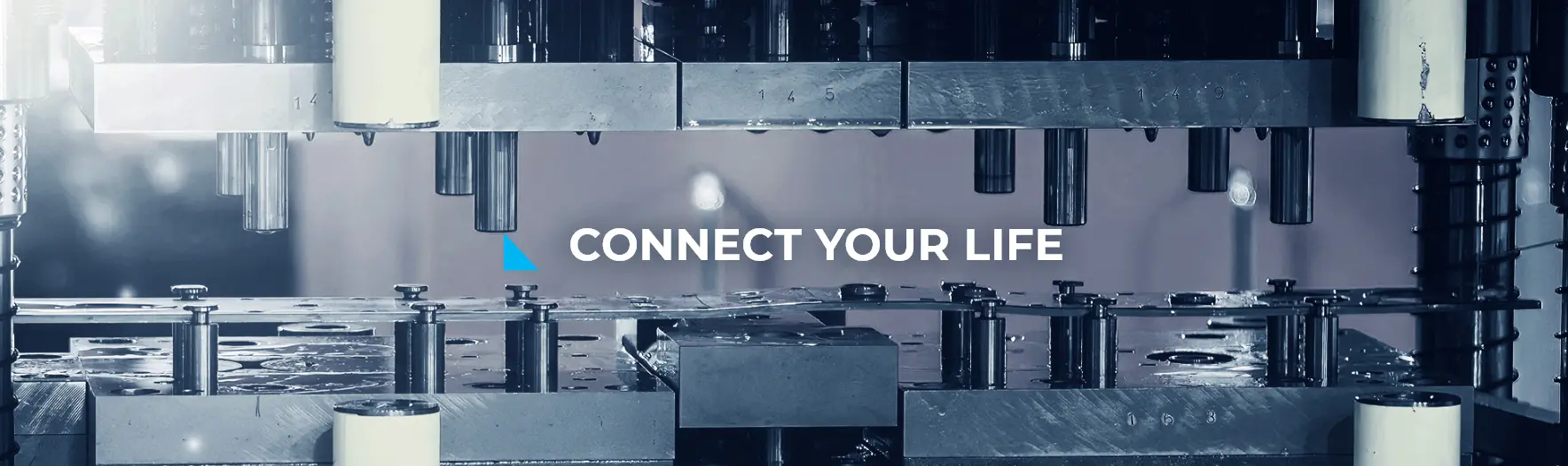
How to Prevent Scratches on Precision Metal Stamping Parts

In precision metal stamping, the surface finish of a component is often just as critical as its dimensional functionality. Scratches represent one of the most pervasive and frustrating quality challenges for manufacturing engineers. This is especially true for "cosmetic parts," where even a microscopic surface defect can trigger bulk rejections, escalating costs, and missed delivery schedules.
This article analyzes the root causes of scratches and outlines how to mitigate these risks through material protection, process control, and early-stage planning, drawing on systematic management practices.
Why Minor Scratches Lead to Major Losses
1. Cosmetic Parts Demand Higher Surface Quality
For visible components such as printer enclosures and industrial camera housings, surface quality directly affects the overall product appearance. Compared with functional parts, cosmetic components require stricter quality standards to ensure a flawless finish.
2. Strict and Subjective Inspection Standards
Even minor scratches or surface defects can result in customer rejection, as appearance inspections often rely on strict visual criteria. This makes cosmetic quality more challenging to control than internal functional components.
3. Higher Costs from Surface Defects
Small scratches discovered during inspection or after delivery can lead to rework, scrap, product returns, and shipment delays. Maintaining stable surface quality is essential to reduce production risks and protect customer satisfaction.
Common Causes of Scratches in Metal Stamping
To prevent scratches effectively, the first step is to map out exactly how they occur during the production of metal stamping parts. In a complex stamping process, every point of contact between the workpiece and external interfaces carries latent risk.
1. Raw Material Handling and Contact
Risks often occur long before the material reaches the stamping press. During transit, warehousing, and loading onto the uncoiler or feeder, sheets and coils can easily rub against each other or collide with equipment edges if proper handling techniques or protective measures are absent, leading to initial micro-scratches.
2. Die Friction During Stamping
During bending or forming stages, die components—specifically the punch and the die insert—exert immense pressure on the material. If the tool surfaces lack sufficient polish, if lubrication is uneven, or if microscopic metal flakes accumulate, the material will experience severe friction as it flows across the tool steel, generating linear or banded scratches.
3. Collisions During Part Ejection
This is frequently the most overlooked stage. Once a part is blanked or separated from the carrier strip, it often relies on gravity to drop into a collection bin. If the drop height is too steep or parts stack up quickly, high-velocity metal-to-metal impacts inevitably cause dents, dings, or scratches.
4. Friction During Packaging and Transit
Even if a part leaves the press in pristine condition, it remains vulnerable. If the packaging design fails to account for vibration and shifting during shipping, parts will rub against one another inside the carton, resulting in what the industry calls "transit scratches."
Key Process Control Methods to Prevent Scratches
To address these critical pain points, premier specialists in precision metal stamping like Ming Chiang implement a multi-dimensional matrix of control methodologies to minimize risk.
1. Raw Material Protection: Pre-Filmed Stamping
For demanding cosmetic components, the most effective approach is protecting the metal surface before fabrication even begins.
- Surface Shielding: Leading manufacturers require suppliers to apply a specialized plastic protective film (such as a blue PE film) to the raw metal surface.
▲Premium raw metal coils pre-applied with protective blue PE film to prevent initial handling and warehousing scratches.
- End-to-End Integrity: This film remains intact through the entire stamping and bending sequence, only being peeled away just prior to final shipment or at the customer's facility.
- Yield Optimization: Isolating the metal from direct contact with tooling and automation substantially eliminates contact scratches and boosts yields.
▲Close-up of the pre-filmed metal strip and a finished stamped component retaining its surface shield post-fabrication.
2. Smart Ejection and Conveyor Systems
Managing how parts exit the tool steel is critical to eliminating gravity-induced defects and high-velocity impacts.
- Eliminating Free-Fall: Dedicated conveyor systems are integrated at the press output, allowing finished products to transition smoothly and minimizing part-to-part nesting.
- Engineered Landing Angles: When a minor drop is unavoidable, the landing angle is calculated so the part lands on its non-cosmetic surfaces or support legs.
▲In-line progressive stamping process demonstrating controlled part orientation and custom ejection mechanisms to eliminate free-fall damage.
- Structural Verification: Every drop scenario is verified to ensure the material's structural strength can absorb the impact without deformation.
3. Precise Control of Stamping Lubricants
Excessive lubricant use does not always provide better protection and may create additional risks to surface quality. By optimizing oil application during stamping, manufacturers can minimize cleaning requirements and reduce the chance of scratches during the washing process.
- Reduced Cleaning Risks: Lower lubricant usage reduces the need for intensive washing processes, minimizing part movement and friction that can cause scratches in cleaning lines.
- Wash-Free Processes: In some applications, lubricant levels can be reduced enough that residual oil can be removed through manual wiping instead of automated cleaning. This approach helps protect stamping parts from cleaning-related damage while improving production efficiency.
4. Packaging Design and Early-Stage Verification
Packaging should never be an afterthought left for the end of production; it must be treated as a core deliverable during the development phase to prevent transit-related defects.
- Front-End Collaboration: Professional manufacturers like Ming Chiang usually partner closely with clients during the Engineering Sample (ES) or T0 phase to define the packaging protocol for these complex metal stamping parts.
- Objective Boundary Samples: During this stage, actual defect photos illustrating varying degrees of scratches, dents, and creases are compiled to establish clear, mutually agreed-upon boundary samples.
- Risk Mitigation: This rigorous alignment guarantees that critical issues are resolved early so mass production runs without surprises, protecting both delivery schedules and component aesthetics.
5. Quality Inspection Standards: A Commitment Beyond MIL-STD-105E
While standard compliance is necessary, protecting cosmetic parts requires a much stricter benchmark than basic statistical sampling.
- The Sampling Baseline: For international compliance, professional manufacturers like Ming Chiang utilize the MIL-STD-105E AQL 0.40 / General Inspection Level II sampling plan. (For a lot size of 35,001 to 150,000 units, this dictates a sample size of 500 pieces with an accept/reject threshold of 5/6 pieces).
- The Ming Chiang Zero-Defect Commitment: Standard sampling is merely our baseline. To guarantee flawless cosmetic quality, our packaging personnel perform a 100% visual inspection during the packing process, ensuring shipped quality far exceeds typical international criteria.
Why Proactive Front-End Control Outweighs Post-Production Inspection
Preventing Problems Before Mass Production
Most scratch defects originate from early-stage processes rather than final inspection. Factors such as product design, tooling decisions, material handling, and production methods have a major impact on surface quality. Identifying potential risks during the planning stage is far more effective than detecting defects after production.
Reducing Risks Through Early Communication
Close communication between customers and manufacturers during the development stage helps identify surface quality challenges before mass production begins. By reviewing designs, materials, and processes early, manufacturers can optimize production conditions and significantly reduce the risk of cosmetic defects.
Improving Production Stability and Delivery Reliability
A proactive quality approach minimizes rework, scrap, and unexpected production interruptions. By controlling risks at the source, manufacturers can achieve more stable mass production, maintain consistent quality, and ensure reliable delivery schedules.
Conclusion: Cosmetic Quality Comes from Systematic Process Control
Surface quality cannot be achieved through inspection alone; it must be built into every stage of the manufacturing process. From raw material selection and stamping processes to part handling and packaging, every step requires careful control to prevent scratches and cosmetic defects before they occur.
Stable quality comes from manufacturing experience, process discipline, and attention to detail. By implementing comprehensive quality management throughout the entire production flow, manufacturers can minimize risks, improve yield rates, and consistently deliver precision metal stamping parts with excellent surface finishes.
For products with strict appearance requirements, Ming Chiang provides professional process evaluation and customized solutions to help customers achieve stable and reliable cosmetic quality. Ming Chiang is an experienced precision metal stamping part manufacturer in Taiwan. At Ming Chiang, we believe that “We’d rather be a bit demanding at the beginning than become a problem later.” By identifying potential risks during the early development stage, we help customers avoid costly quality issues during mass production. Through close communication, process evaluation, and detailed verification, we ensure that “We solve the hard problems early—so mass production runs without surprises.”
Our expertise enables us to support high-quality components for demanding applications, including printer components that require both precise dimensions and superior surface appearance.
If your products require precision metal stamping parts with strict surface quality requirements, please contact Ming Chiang. We can help evaluate your manufacturing process and provide the most suitable solution.